
Did Venus Swallow: 10 Amazing Facts You Need to Know (2026)
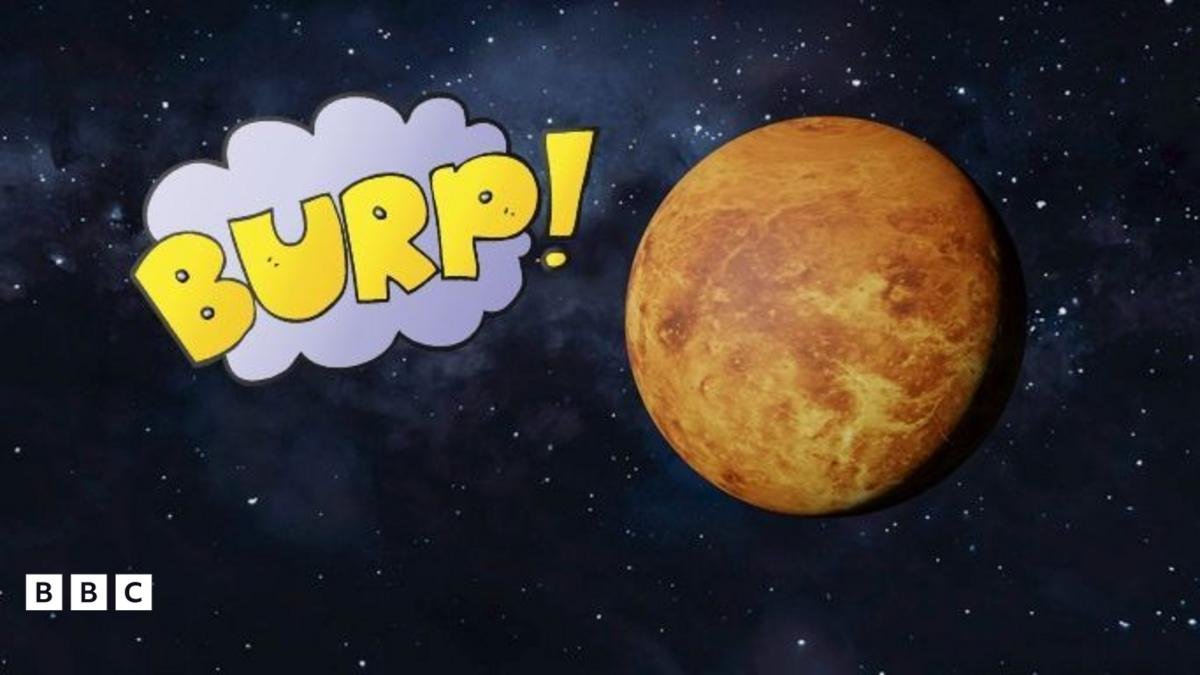
Have you ever wondered if did venus swallow its very own moon? Planetary scientists have recently proposed a groundbreaking space theory that addresses our neighbouring planet’s missing satellite. For decades, astronomers have puzzled over why Venus rotates backwards and lacks a natural moon. Today, new scientific models suggest that a dramatic planetary collision might have occurred billions of years ago. In this comprehensive guide, we will explore the fascinating details behind this cosmic mystery, examining how scientists study orbital mechanics and planetary evolution.
📑 Table of Contents
1. The Great Venus Mystery: Why Venus Has No Moon
When looking at the inner solar system, most planets boast natural satellites. Earth has our trusty Moon, while Mars proudly holds Phobos and Deimos. However, Venus stands completely alone in the cosmic void. Astronomers have long wondered why our sister planet features zero moons. Recent research questions whether did venus swallow its satellite through orbital decay. Furthermore, understanding this anomaly helps researchers map out the chaotic early days of our solar system.

In addition to lacking a moon, Venus rotates in the opposite direction compared to most other planets. Scientists refer to this as retrograde rotation. This peculiar spin further supports the idea that massive impacts shaped its history. If a major collision occurred, it could explain both the backwards spin and the disappearance of a lunar body.
2. How Did Venus Swallow Its Own Moon? The Collision Theory
The core hypothesis suggests that Venus originally formed with a companion moon. Over millions of years, gravitational tides altered the moon’s orbit. Instead of moving outward like Earth’s moon, this theoretical satellite drifted inward. Eventually, the orbit decayed to a critical point where did venus swallow the celestial body whole. The impact would have released immense energy, dramatically altering the planet’s internal structure and atmospheric composition.
- Venus lacks any natural satellites today.
- Orbital decay could explain how did venus swallow a past moon.
- Retrograde rotation points to violent historic impacts.
- Modern space missions continue to investigate planetary origins.
Many astrophysicists utilize advanced computer simulations to test this scenario. By modeling gravitational interactions, researchers can visualize the exact mechanics of how did venus swallow such a massive object without completely destroying itself. While definitive proof remains elusive, mathematical models show high plausibility.
While exploring cosmic mysteries, entertainment fans can also check out the Upcoming Ott And Theatrical: 6 Top Picks 2026 for the latest cinematic releases.
3. Orbital Mechanics and Tidal Forces Explained
Tidal forces play a crucial role in planetary systems. As gravity pulls between a planet and its moon, energy transfers continuously. On Earth, our moon slowly recedes at a rate of about 3.8 centimeters per year. Conversely, smaller orbits experience inward migration under specific gravitational conditions. This exact physical process forms the foundation of theories regarding how did venus swallow its satellite.
Specifically, when a moon orbits closer than the synchronous orbit radius, tidal friction slows its movement. The moon loses orbital energy and spirals downward. Once it crosses the Roche limit, tidal forces tear the moon apart before surface impact occurs. Consequently, researchers debate whether the planet absorbed a shattered ring system or an intact body.
4. Comparing Inner Planets: Earth, Mars, and Venus
To truly grasp planetary evolution, scientists compare the geological profiles of inner planets. Each rocky world tells a unique story of formation, bombardment, and atmospheric development. Let us examine a direct comparison between Earth, Mars, and Venus.
| Planet | Number of Moons | Rotation Direction | Key Evolutionary Event |
|---|---|---|---|
| Earth | 1 | Prograde | Giant impact formed the Moon. |
| Mars | 2 | Prograde | Captured asteroid moons. |
| Venus | 0 | Retrograde | Hypothesis suggests did venus swallow its moon. |
As seen in the table above, Venus stands out as a major outlier. This structural difference drives ongoing astronomical research supported by space agencies worldwide. For more behind-the-scenes creator insights, explore Exclusive Why Tigmanshu Dhulia: 10 Epic Big Revelations 2026.
5. Modern Space Telescopes and Planetary Exploration
Advanced technology in 2026 allows scientists to study planetary atmospheres and gravitational fields with unprecedented precision. Instruments like the Nancy Grace Roman Space Telescope and various orbital probes gather vital data. By analyzing atmospheric trace gases and surface geology, researchers test theories about how did venus swallow past bodies.
Furthermore, upcoming missions led by space agencies aim to map Venus’s surface in high resolution. These missions will search for geological scars that might confirm ancient impacts. Fans of television drama can also catch up with Yeh Rishta Kya Kehlata: 5 Best Twists and Updates 2026, while reality TV enthusiasts might enjoy Bigg Boss 20 Update: 5 Ultimate Twists and Updates 2026.
For stunning visual content and celebrity spotlights, check out the Isha Rikhi Bold Photoshoot: 10 Stunning & Bold Pictures 2026. Meanwhile, space research continues to inspire global curiosity.
6. Frequently Asked Questions
Did Venus swallow its own moon?
Scientists have proposed a theoretical model suggesting Venus may have had a moon that spiraled inward and crashed into the planet due to tidal orbital decay.
Why does Venus not have any moons today?
Current theories suggest that either tidal forces caused a past moon to crash into the planet, or gravitational interactions stripped away any natural satellites early in its history.
When was the missing moon theory proposed for Venus?
Planetary scientists introduced and refined this intriguing hypothesis during recent astronomical studies, gaining significant attention across global space research communities.
How does Venus rotate compared to Earth?
Venus rotates in a retrograde direction, meaning it spins backwards from east to west, unlike Earth which spins from west to east.
Could Venus have absorbed a ring system instead of a moon?
Some researchers suggest that tidal forces may have first converted a moon into a planetary ring system before the material ultimately accreted onto the planet.
What space missions are currently studying Venus?
Multiple international space agencies are deploying advanced orbiters and atmospheric probes to map Venus and investigate its geological history.
Is there definitive proof that did venus swallow a moon?
There is currently no direct physical proof, but computer simulations and orbital mechanics strongly support the plausibility of the theory.
How do tidal forces affect planetary moons?
Tidal forces transfer gravitational energy between bodies, causing moons to either slowly move outward away from planets or spiral inward toward them.
Conclusion
In summary, the fascinating question of whether did venus swallow its ancient moon opens a remarkable window into solar system dynamics. Through advanced computer simulations, tidal physics, and upcoming planetary missions, scientists continue to decode the turbulent history of our cosmic neighbor. While mysteries remain, the inquiry into how did venus swallow its missing satellite highlights the ever-evolving nature of modern astronomy. We invite you to share your thoughts in the comments below, share this article with fellow science enthusiasts, and explore more captivating features right here on JattFlix!